

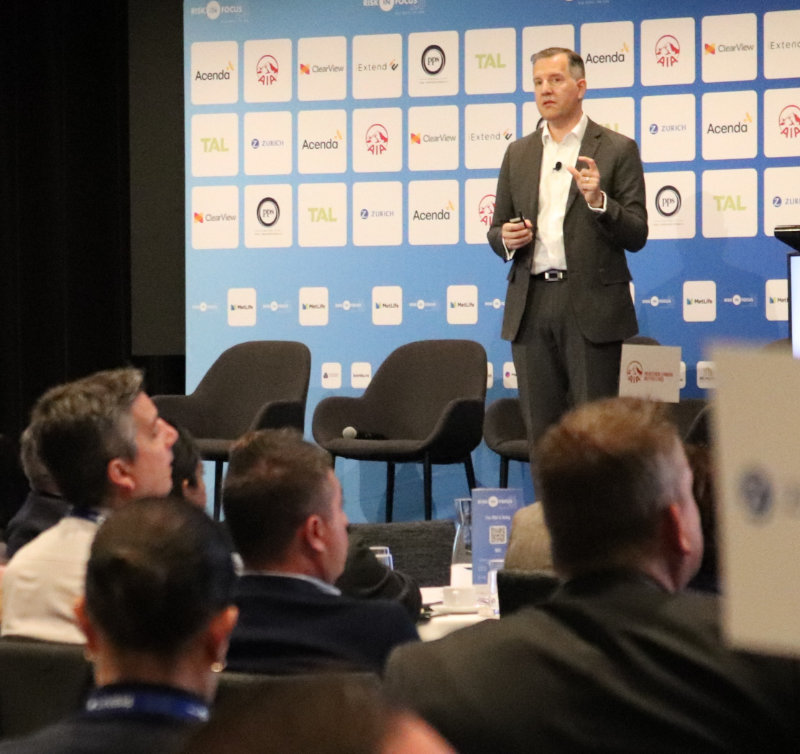
Life insurance advice must evolve beyond product provision to address clients’ ability to recover from illness and injury, says Adam Crabbe, Zurich’s Risk Strategy Specialist.
Speaking at Riskinfocus 26 he said “…the single biggest risk that will impact any client’s plan moving forward is their health”. Adding that an insurance payment is “often just the start of the journey” for clients and their families.
He said advisers needed to focus on what he described as “health resilience”, defined as a client’s ability to adapt to and recover from illness or injury.
“That recovery is not just physical,” Crabbe said, noting mental preparedness and support networks play a critical role.
He cited clinical observations that recovery outcomes were heavily influenced by a patient’s mindset, with “90 per cent” of rehabilitation effort linked to mental readiness.
Crabbe’s key points:
- Health is the biggest risk to financial plans
- Gap between retirement advice and risk reality
- Mental health is a dominant claims driver
- underinsurance, especially trauma cover
- Small adviser actions can significantly improve outcomes
- Tools and data are becoming central to advice delivery
He said Zurich’s research into health resilience, based on more than 880,000 data points across 2,500 communities, identified three key drivers:
- Underlying health conditions
- Lifestyle factors
- Access to care
Crabbe added that higher levels of resilience were associated with younger females living in metropolitan areas with better access to healthcare, while lower resilience was more common among older males in regional locations with higher rates of smoking and alcohol consumption.
…insurance costs are rising alongside claim risk…
He also highlighted a mismatch between the industry’s focus on retirement planning and the prevalence of health-related disruptions to work saying that of the 427 Australians who retire each day, about 55 are prevented from retiring [as planned] due to ill health.
“They’re typically about 10 years younger than the retirement average, entering a phase where insurance costs are rising alongside claim risk,” he said.
“Those advisers who have decided to scope out or shift focus away from insurance…This is the opportunity. It’s fantastic that they’re focusing on retirement, but far more people in the community are going to be potentially vulnerable and impacted by a cancer diagnosis, by a mental health event, by an accident, by a premature death.”
…advisers should be prepared to support clients in vulnerable situations…
Claims data shared by Crabbe reinforced the trend, with musculoskeletal conditions, cancer and mental health the leading causes of claims. Mental health conditions now account for nearly one in three TPD claims.
He said advisers should be prepared to support clients in vulnerable situations and ensure appropriate processes were in place within their practices.
He also pointed to underinsurance, particularly in trauma cover, with only a small proportion of Australians holding policies despite the high financial impact of serious illness.
Click here for more Riskinfocus 26 reports.