





Our report on claims specialists cautioning advisers on the risk of rushing to lodge TPD claims emerged as a standout topic for readers this week…
Claims specialists speaking at the recent Entireti Risk Summit Roadshow events cautioned advisers that rushing to lodge TPD claims quickly can create significant litigation risk, client dissatisfaction, and costly delays.
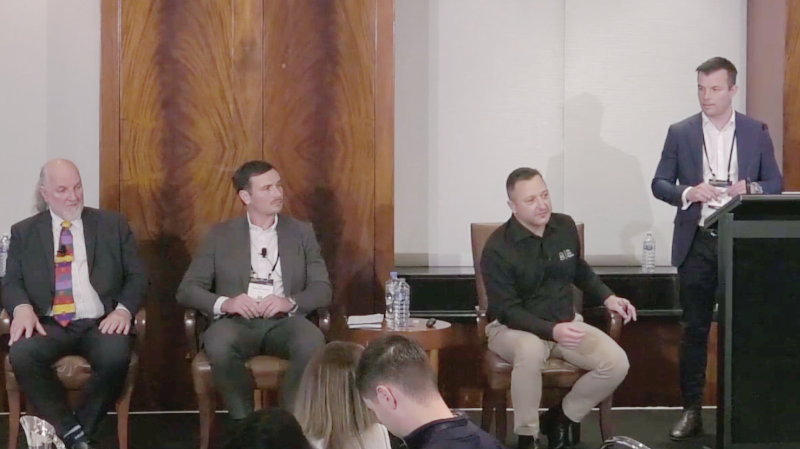
In a panel discussion led by Aaron Zol, Entireti’s Head of Business & Insurance Growth, Trevor Battersby, Founder of TPD Claim Support, and veteran claims consultant Col Fullagar, Principal of Integrity Resolutions, said advisers need to adopt a far more strategic approach to submitting TPD claims on behalf of clients.
Battersby said one of the biggest problems he sees is the tendency to “submit and hope”, where claims are lodged before medical evidence, occupational definitions, and permanency requirements have been properly assessed.
According to Battersby, advisers and clients often underestimate how quickly frustration escalates once a claim is submitted, followed by apparent radio silence.
“At the six-month mark, if you’re not getting traction, there’s definitely something not working,” he said.
We’re looking at how to future forecast everything required to put the claim in…
“At the 12-month mark we see a significant spike where clients get fed up and start hearing from family, friends or legal firms telling them to get a lawyer.”
Battersby said the industry was seeing identifiable “trigger points” where claims increasingly move toward litigation, particularly after 12 to 18 months of delays.
He argued that many of those disputes could be avoided through stronger upfront preparation and pre-assessment work before a claim is formally lodged.
He outlined an 11-step pre-assessment process used by his team, including:
- Eligibility testing
- Review of original applications
- Occupational analysis
- Social media reviews
- Medical evidence assessment
- Policy definition analysis
“We’re looking at how to future forecast everything required to put the claim in a box with a ribbon on it to avoid those long delays,” said Battersby.
One major issue, he added, was confusion between diagnosis and permanency.
“A lot of claimants think, ‘I’ve been diagnosed, I want my claim’,” said Battersby. “But diagnosis is not a permanency test.”
He said many claims are lodged before specialists have confirmed a claimant is unlikely to return to work, leading to procedural fairness disputes and extended delays.
Mental health
Mental health claims were highlighted as a particular problem area. Battersby said many clients initially see psychologists under mental health treatment plans, but TPD definitions often require supporting evidence from a psychiatrist.
“It is amazing how many times we see that,” he said.
The panel also discussed how occupational definitions can unintentionally undermine claims.
As a financial adviser there’s a requirement in claims support to have competence…
Battersby described cases where claimants undertook retraining or new study programs while waiting for claims to be assessed, only to create new “skills and experience” arguments insurers could later rely upon.
He warned advisers that poor communication and lack of client coaching during the claims process often created openings for litigation firms and complaints specialists regardless of whether you charged a fee or submitted at no cost. Immaterial.
“As a financial adviser there’s a requirement in claims support to have competence and maintain confidence as well as utilise a diligent documented claims and process,” said Battersby.
“The minute you submit, as a financial adviser the client will assume they’re going to get paid. A documented eligibility check is critical in managing expectations or addressing red flags before a submission.”
Look for problems
Fullagar said advisers and claims specialists needed to approach TPD claims by actively searching for potential weaknesses before submission.
“To be honest, I look for as many problems as possible,” he said.
He described reviewing policy definitions, benefit limits, disclosure issues, occupational duties, and income structures before any claim is lodged.
In one example, he identified a potential exposure involving two TPD policies worth a combined $12m, where the insurer had a market maximum benefit limit of $10m.
“Had both claims been lodged simultaneously, the adviser could have faced immediate litigation exposure,” said Fullagar.
…don’t answer the questions on the claim form if the question isn’t worded correctly…
He recommended a “highly structured process” for making claims, including carefully reviewing claimant declarations and ensuring medical evidence aligns with client statements before submission.
“You don’t answer the questions on the claim form if the question isn’t worded correctly,” he said. “You give the insurance company the information they need rather than answering the question they ask. Change the question if you have to – it’s only a form.”
He also stressed the importance of synchronising to ensure consistency between claimant and doctor statements before forms are submitted. If any inconsistencies are found, the correct position should be identified and an explanation provided.
“It’s very easy to change your statement,” he said. “But it’s much more difficult to change the doctor’s. Get the fact base first (i.e. the doctor’s statement) and ensure consistency in the submission.”
Fullagar argued that advisers should not automatically panic when errors occur, including cases involving lost insurance cover.
“Simply because you might have made a mistake doesn’t mean someone else hasn’t also made a mistake,” he said.
He urged advisers to investigate insurer processes, lapse procedures and historical underwriting issues before conceding liability.
The panel also discussed the growing role of specialist claims consultants, with Battersby arguing many disputes escalated unnecessarily because claims moved too quickly into formal legal channels instead of being reworked and resubmitted.
Key takeaways
- Avoid “submit and hope” TPD claims strategies
- Pack, formalise an eligibility checklist and document the conversation where you’ve addressed any components that don’t confirm the eligibility
- The importance of collating medical evidence and research with the relevant PDS is critical prior to a submission
- If in doubt scope out and seek professional advice
- Treat TPD claims as a structured advice process, not an administrative exercise
- Separate diagnosis from permanency when assessing claim readiness
- Pay close attention to occupational definitions, retraining and post-disability work activity
- Review original applications and disclosure history before submission
- Align claimant statements and medical evidence before lodgement
- Be especially careful with mental health claims where psychiatrist evidence may be required





What a truly depressing article. No wonder we have rising claims costs and rising premiums. And advisers blame everyone but themselves. Here a few quotes that panellists were willing to say out loud and be recorded on. Imagine what they say when the speakers are off!!!
1: "Battersby described cases where claimants undertook retraining or new study programs while waiting for claims to be assessed, only to create new “skills and experience” arguments insurers could later rely upon."
So Mr Battersby thinks people who can re-train should not. Better to play the system, get a TPD claim, and then re-train and go back to work. How does that help the insurance pool? How is that fair and reasonable?
2:"In one example, he identified a potential exposure involving two TPD policies worth a combined $12m, where the insurer had a market maximum benefit limit of $10m. “Had both claims been lodged simultaneously, the adviser could have faced immediate litigation exposure,” said Fullagar."
So Mr Fullager thinks it is OK to hide information from the insurer to get payments that clearly were not intended? How does that help the insurance pool? How is that fair and reasonable?
3: “You don’t answer the questions on the claim form if the question isn’t worded correctly,” he said. “You give the insurance company the information they need rather than answering the question they ask. Change the question if you have to – it’s only a form.”
So Mr Fullager knows better than the insurance companies what information they want? How's that work if you're applying for a licence or passport? Is that "only a form"?
Could Mr Battersby's and Mr Fullager's other (healthy) clients sue them for not acting in their best interests by supporting claims that are not reasonable and fair? Now that I'd enjoy.
WOW! Them's fightin' words, as they say. Quite a confronting answer 'Anon' (would love to know who you really are). On the surface it seems Mr. Fullager is plugging away for the client. I worked with him in a past life back in the 80s and early 90s when he was at Tyndal and other times. I respected him highly and found him to be an incredibly switched-on, intuitive and encyclopedic reader of policy documents and interpreter thereof. He was and probably still is regarded as one of the true authorities of product design and interpretation in the once-great insurance industry. Incidentally, I wonder what his opinion of the 'slop' served up as contractual definitions in policies these days would be. I'm comparing to classic comprehensive polIcies like the early 90s FAI LOI IP and Tyndal's own top class IP policies just to name a few. These had consumer friendly definitions for which one was actually happy to pay. Yes, this article is on TPD but that's just a strong example that comes to mind. Whilst I'm indeed edified by your well structured comments and appreciate reading your opinion, I would very much like to know your position in the industry, to help assess your veracity, if not your name.
Hey Squeaky21,
Thanks for the reply, and a good reminder that we're all humans and I should have been more circumspect with my feedback. My apologies to Mr Battersby and Fullager. I was not at the conference and don't know the context in which the quoted comments were made, or indeed if they were accurate.
I work for a life insurer and have done for a long time. [My employer has strict rules around public comms, so easier to stay anon].
FWIW, I see life insurers seemingly not working very well with advisers and vice versa. I wish we could work together. Some reflections:
> insurers have been losing lots of money for the last decade and the recent leap in TPD experience is an example. Comments from advisers on sits like these keep talking about price increase gouging etc, which is unfair and inaccurate. I can promise you that the insurers do not want to put up pricing – they just have little option;
> from insurer perspective, I am convinced that many people receive claims when they don't really need it and certainly don't meet intent of the cover. All this does is push premiums up. For example, DI premiums are probably double what they were 10-15 years ago – yet population morbidity stats don't show this at all.
> the more advocates we have to pay individual claims, the higher the premiums for all. We see advocates for individuals from legal firms, advisers, doctors, AFCA, regulators, lobby groups. We don't see any advocate for the pool of insured. I think this is a major problem. As a society we need to look after greater good and encourage more people to return to work and contribute to society.
> many people in life insurers today see the main issue as a "distribution problem". Apart from fewer advisers (for reasons we are both familiar there is the "best interest duty" conundrum. Unfortunately "best interest duty" forces advisers to recommend the most feature rich product regardless of price (I have spoken with a number of advisers who confirm a real fear of being sued if their client could have claimed under a different policy). I suspect it also forces advisers to cover for worst case and generally over-insure (eg if TPD benefit is justified by being used to pay off mortgage / replace future income for example, then there is significant less need for DI cover.)
> Advisers (at least the comments on websites like these) see the issue as a problem of system being too hard (too much red tape etc), but also a product problem where products are becoming less valuable to consumers. yet the above comments above leave insurers no option but to tighten products.
> As an aside, I see advisers comment that the lack of new business is the reason for price increases. This is not correct. Insurers do not cross-subsides between old and new customers.
Comments are closed.