

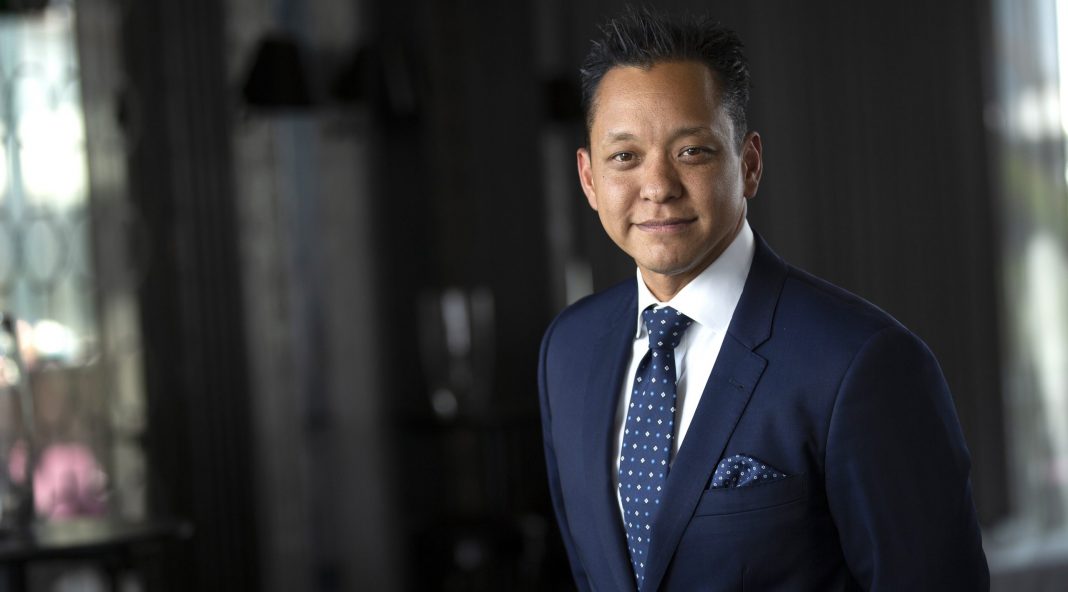
AIA Australia CEO Damien Mu says the insurer is ready to move from “defence” back into “offence” – but says it would be disingenuous to talk about growth and new products without first acknowledging the impact recent premium increases have had on advisers and their clients…
In a wide-ranging conversation with Riskinfo, Mu reflected on what he describes as a fundamental paradigm shift confronting the life insurance sector – driven particularly by changing disability and mental health claims experience – while outlining AIA’s renewed focus on product sustainability, premium certainty, adviser relationships and helping customers recover rather than simply paying a claim.
For Mu, however, that conversation starts with acknowledging the recent past.
“We have to acknowledge that we have made it very challenging over the last few years for [adviser] businesses and their clients with the increases in premiums,” he says.
Mu later sharpened that acknowledgement, noting premium increases had made advisers’ roles “more challenging and difficult” and diverted them from “…the real job of ensuring and protecting more Australians” towards revisiting and managing existing clients.
“It would be disingenuous to say, ‘Hey, look at this, we’re back in offence’ … without acknowledging the reality of what the last few years have been.”
He says the industry needs to learn from that experience if insurers and advisers are to collectively address Australia’s widening advice and life insurance gap.
From defence to offence
Mu characterises AIA’s position over the past few years as one of “heavy defence” – unfamiliar territory for an organisation accustomed to sustained growth across both its retail and group businesses.
But he believes the environment confronting the sector has fundamentally changed.
“We’re not dealing with just tinkering here,” he says. “There needed to be a revolution and a reimagination of how we look to grow into the future.”
Part of that change relates to the reduced capacity of the advice profession to reach Australians requiring personal life insurance advice.
Mu points to adviser numbers having approximately halved, alongside remuneration changes, education standards and compliance obligations which have made the delivery of life insurance advice increasingly challenging.
At the same time, the underlying nature of disability claims has been changing.
Mu points in particular to the substantial increase in subjective claims associated with mental health, which he describes as a behavioural as well as a financial and economic challenge.
This is a fundamental paradigm shift…
“This is a fundamental paradigm shift,” he says.
AIA paid more than $2.4 billion in claims during 2025, according to Mu, with TPD accounting for around one-third of claims paid and mental health the leading cause of TPD claims.
The challenge, he says, is less about diagnosing mental ill health and more about establishing whether a condition has produced severe, enduring and permanently disabling functional impairment.
Subjective conditions can be episodic and fluctuating, he notes, with functional impairment often cognitive, behavioural or psychosocial rather than physical and therefore more difficult to assess objectively.
Rethinking TPD
It is against this backdrop that AIA has developed its new TPD Core* proposition.
Mu says the intention is not to undertake a wholesale reinvention of TPD, but to retain those elements advisers and consumers value while bringing greater clarity to areas associated with claims volatility, premium pressure and uncertainty.
For approximately 70% of conditions, he says, there will be no fundamental change to the assessment approach, with physical and objectively-assessed conditions continuing along a familiar pathway and retaining access to lump-sum benefits.
The key difference applies to specified subjective conditions, including certain mental health, pain and fatigue conditions.
TPD Core introduces clearer requirements around the evidence needed to establish severity and permanence, including specialist care, reasonable treatment and rehabilitation, a minimum continuous treatment period and – for relevant psychiatric conditions – an established impairment assessment framework.
Mu says this approach is fundamentally about certainty.
“Customers and advisers can have certainty of what they’re going into and what they will be assessed against.”
AIA has also elected to retain a lump-sum structure rather than an instalment model – a decision Mu says was informed by adviser and consumer feedback.
“What they want is certainty,” he says. “Tell me what I’m covered for, tell me what assessment I need to qualify for and be assessed against.”
“The more ambiguity, the more jargon …it undermines my confidence in the product and the value that I perceive.”
Five-year premium guarantee
Perhaps most significantly for advisers, Mu says TPD Core will carry a five-year rate guarantee.
…annual premium increases have been one of the biggest sources of frustration for advisers
He acknowledges annual premium increases have been one of the biggest sources of frustration for advisers managing existing AIA clients.
He says advisers don’t want to be sitting down with a client and keep having to review their insurance because their premiums are going up every year.
“And the client is losing trust, and we’re trying to build trust with clients.”
Mu says AIA therefore needed to offer something meaningful in return if it was going to ask advisers to reconsider the insurer.
“If we want to ask our advice partners to support us, we need to give them something in return – and their clients.”
Importantly, Mu says success will not simply be measured by new business sales.
It will also be measured by whether advisers have confidence recommending the proposition, whether clients understand it, whether premium certainty can be maintained and whether claims outcomes deliver the certainty promised.
Supporting existing policyholders is another critical measure.
…new products are welcome, but don’t forget existing customers
Mu says the number one message AIA has received from its adviser partners has effectively been: new products are welcome, but don’t forget existing customers.
“Love your new products and what you’re talking about. Help us with our existing customers,” he says.
More than paying a claim
Underlying the product conversation is a broader shift in how Mu sees the role of a contemporary life insurer.
He says AIA’s investment over the past decade across health insurance, wellbeing, recovery programs and return-to-work support is increasingly being brought together around a proposition which seeks to help customers remain well, recover when illness or injury occurs and ultimately return to work and a healthy life.
The insurer’s experience, he says, demonstrates that customers increasingly want more than a cheque.
AIA reported an 83% improvement in psychological symptoms among customers participating in its Mind Coach program, while 67% of customers participating in a return-to-work focused rehabilitation program successfully returned to work.
“The product isn’t just about paying a benefit,” Mu says.
Customers still need financial support, but increasingly they are also asking how they can access treatment, retrain for another occupation, deal with the consequences of serious illness and return to a fulfilling life.
“There’s so much more that Australians need alongside that financial support,” he says.
“…it goes all the way from being well, to staying well, to getting well and then absolutely about thriving again.”
Rebuilding trust and confidence
Mu says the foundation on which this broader proposition rests remains straightforward: advisers and their clients first need confidence the underlying insurance product will work when it is needed.
“The fundamental is – give us the certainty and confidence that the core thing that a customer comes to see us about is, if in the event something unfortunate happens, the insurance benefit does what it needs to do.”
That includes confidence around premiums and avoiding unexpected increases.
“Build that trust and confidence in that and then …the doors just open up to have the more uplifting, energising conversation about how we help you recover, get well and stay well.”
Mu says AIA has also been investing in adviser portals, underwriting, administration and service as part of what he calls the insurer’s “production system” – built around three interconnected elements: relationships, propositions and service.
On relationships, the question he says AIA must answer is whether it can “…earn the right” for advisers to consider the insurer again.
If advisers do reconsider AIA, it must then have propositions they are confident choosing for their clients. And once that choice is made, the insurer has to fulfil its promise through service.
Mu says AIA has spent the past few years undertaking the necessary investment and “heavy lifting” to strengthen all three.
“We need to make sure we’re good at all of them at the same time,” he says.
“That’s what we’ve been doing – and that’s why we’re ready to go.”
* AIA’s TPD Core product offer was launched this week…
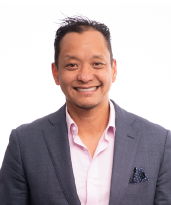 Damien Mu is the CEO and Managing Director of AIA Australia, and an Executive Director of AIA Health Insurance.
He has more than 25 years’ experience in the Australian financial services industry, with management experience spanning life and health insurance, superannuation and investments. His career at AIA Australia began in 2007, and he was appointed to the role of CEO in 2014.