

Advisers attending June’s 2025 MDRT Annual Meeting in Miami were urged to focus on two critical areas – build trust with clients and avoiding negative surprises.
In his one-hour presentation, Tim Clairmont – founder of US-based Clear Financial Partners – outlined what it takes to retain and attract clients.
The central thrust of his presentation was on what he called the trust bank, providing clients with reliable and consistent service “…doing what you said you will do, when you said it would do it”.
He said building trust with new clients starts with his existing ones.

“I hate having to build trust with a new client,” he said. “It feels like a waste of time.”
Rather than slowly building credibility from scratch every time a new client surfaces, Clairmont encourages advisers to proactively build trust with their current clients so referrals come pre-loaded with confidence.
“When a new client walks in and says, ‘you take care of John and Susie – I already know I’m going to work with you,’ that’s the best client you can get,” he said
However, he says his ‘rapid trust’ concept is only possible through consistent service, exceeding client expectations, and regularly making deposits in clients’ emotional trust banks.
The only time you ever lose a client is due to a negative surprise…
“In doing so, advisers create advocates who naturally pave the way for smooth onboarding of referrals,” he said. “The only time you ever lose a client is due to a negative surprise.”
He said these surprises often arise due to a disconnect between a client’s expectations and the adviser’s actions, “especially when those expectations were never explicitly stated”.
Clairmont broke down client expectations into two types:
- Explicit: what the adviser says and what the client hears
- Implicit: what the client assumes but was never directly said by the adviser
His advice is to bing assumptions to the surface, and “make the invisible visible in every client interaction,” to help avoid any mis-communication or assumed expectations.
Team development
Elsewhere is his presentation, Clairmont shifted focus to personal and team development, particularly with goal setting.
Drawing on his 2014 book Passionate Ambivalence, he outlined a structured exercise used at his firm whereby each new member of staff is asked to list 100 of their accomplishments.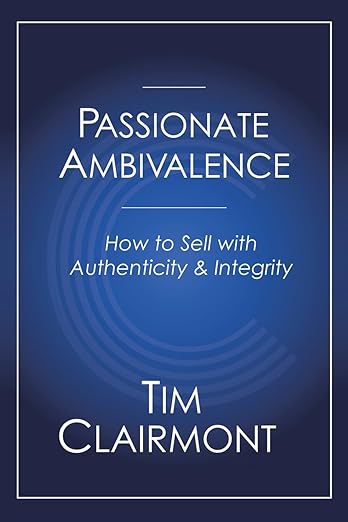
“It’s easy to write 20 or 30,” he said. “Then it gets harder. By 50 or 60, you’ll want to quit. But the breakthrough comes after that.”
This process, he said, reveals patterns of value and passion, helping both advisers and their teams better understand their North Star – where their passions lie.
Clairmont said that for advisers dealing with increasing client expectations and regulatory scrutiny, it’s best not to assume. But to communicate clearly, set aligned goals, and keep making deposits in the trust bank.