

Futurist and demographer Mark McCrindle has urged advisers to focus on the trends reshaping Australia’s economy, workforce, and their own clients.
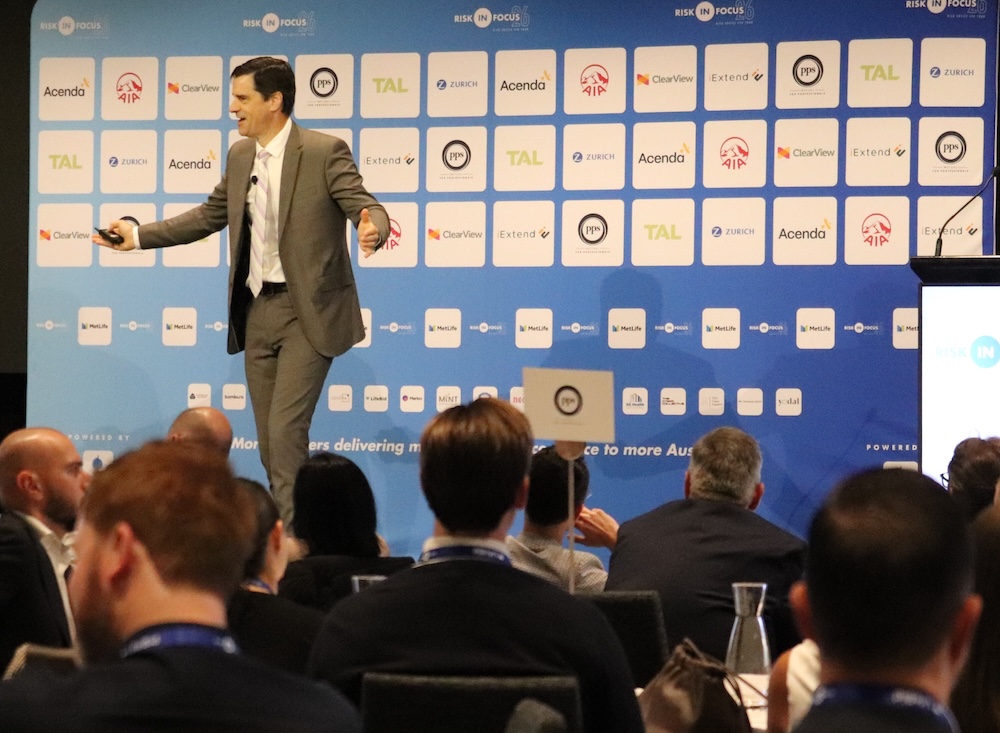
Speaking at the recent Riskinfocus26 event in Melbourne, McCrindle – whose session was supported by TAL and introduced by the insurer’s GM Retail Sales & New Business, Beau Riley – outlined four principles which advisers could use to assist them interpret the future.
Trend 1: Multifactorial – Not Singular
“Advisers are already future-focused,” McCrindle told delegates. “You see the future, you know the realities and you guide clients in that regard.”
However, he warned that analysing change through a single trend – such as artificial intelligence – risks missing the bigger picture. Instead, advisers should view the future through “multifactorial” megatrends.
“Times are not shaped by one narrow trend extrapolated forward,” he said. “It’s the combination of demographic change, technology, and economic context that transports our times.”
Trend 2: Timeless Human Behaviours
At the same time, McCrindle cautioned against assuming technological change will automatically transform behaviour. Timeless human drivers – belonging, security, family, and community – remain powerful forces shaping financial decisions.
…Society swings in one direction and then pulls back toward balance…
Trend 3: Trends and Countertrends
The futurist also argued that trends rarely move in a straight line. Social change often triggers counter-trends that push behaviour back toward equilibrium.
“It’s like a pendulum,” he said. “Society swings in one direction and then pulls back toward balance.”
Trend 4: Waves Vs Tides
For advisers, according to McCrindle, that means distinguishing between short-term “waves” and deeper structural “tides”.

“Waves grab attention because they’re big and visible,” McCrindle said. “But it’s the tides that reshape the coastline. They take decades to arrive but they’re transformative.”
Population
One of those structural tides is Australia’s continued population expansion, McCrindle told attendees.
The country’s population currently stands at about 27.8m, with roughly 2.1m people arriving in the past five years “…the fastest growth recorded in any five-year period”.
Migration remains the largest contributor to growth, with around 70% of new arrivals settling in the country’s two largest states.
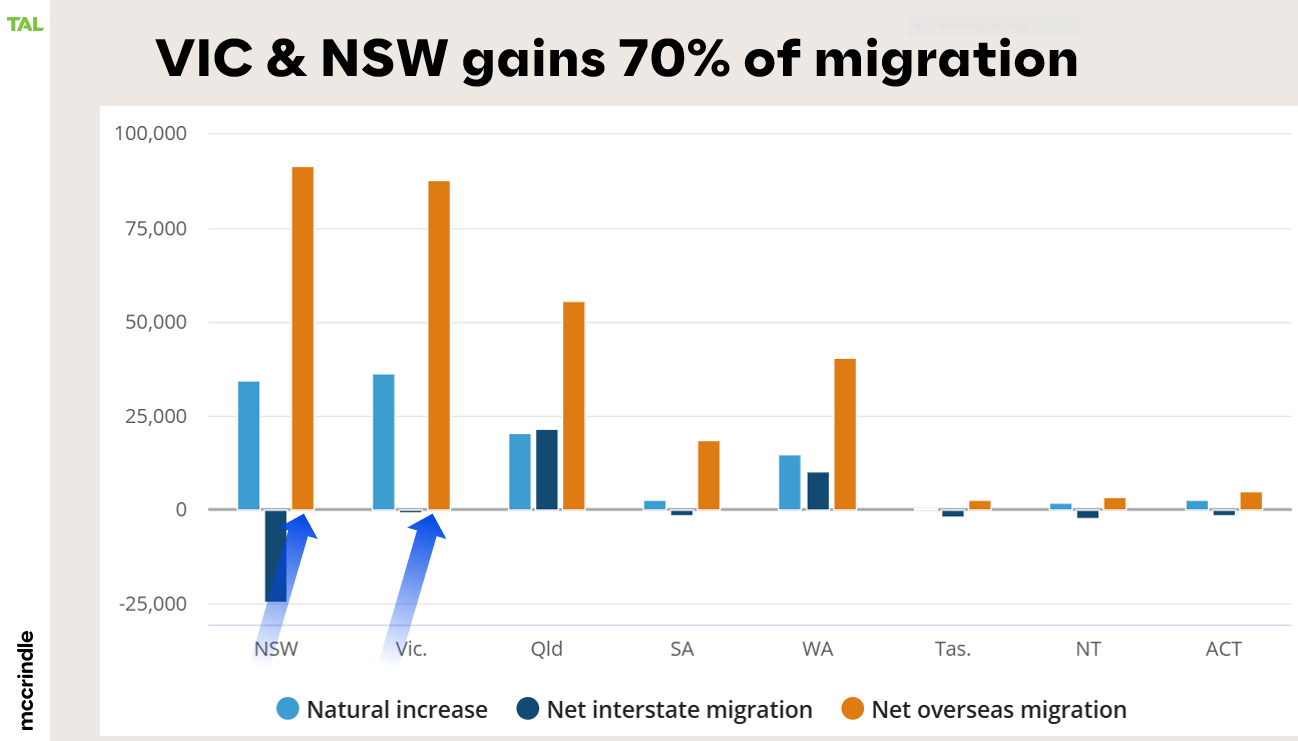
He said overseas migration accounts for the majority of that growth, while internal migration patterns show people continuing to move towards Queensland and Western Australia in search of affordability and lifestyle.
Strong population growth combined with limited housing supply is also pushing traditional life milestones – marriage and children – to later in life.
Despite rising prices, McCrindle said surveys show younger Australians still aspire to home ownership, and that owning a home ranked as the top financial goal among younger adults, just ahead of financial independence and travel.
However, affordability constraints are delaying key life transitions.
Among Australians aged 20-24 who are working, around one-third still live with their parents. Among 25-29 year-olds in full-time work, roughly one in five remain at home. Across the entire 20-29 age bracket, about half live with their parents, pushing the median age of leaving the nest to 26.
McCrindle described the phenomenon as the KIPPERS generation – Kids in Parents’ Pockets Eroding Retirement Savings.

Implications
For financial advisers, the McCrindle said the shift has implications for intergenerational wealth planning, housing affordability strategies, and the timing of insurance and protection advice.
He said that while many advice practices have traditionally focused on older, wealthier Australians, that client base is shifting rapidly.
The high-wealth generations, the Builders (born 1925-1945) and Baby Boomers (born 1946-1964), are leaving the workforce, while Generation X (1965-1979) and Millennials (1980-1994) are moving into peak earning and wealth-accumulation years.
Meanwhile Generation Z (1995-2009) is entering the family-formation stage, with the average age of first-time parents now in the early 30s.
Looking further ahead, he said Generation Alpha (2010-2024) will soon become the largest generation in Australian history.
…Younger generations expect collaboration rather than hierarchy…
Born since 2010, the same year devices such as the iPad and platforms such as Instagram emerged, they are the first generation raised entirely in a digital and AI-enabled world.
“They’re the most technologically immersed generation we’ve ever seen,” McCrindle said. “But they’re also the most globally connected, the most educated and potentially the longest-living.”
Workforce transformation
These generational shifts will reshape the labour market, he said, with Millennials soon to make up the largest share of Australia’s workforce. By the mid-2030s, Generation Z is expected to become the dominant cohort, with Generation Alpha beginning to enter employment.
McCrindle noted that future workers are likely to have far more varied careers, with the average school-leaver expected to hold around 18 jobs across six careers.
For advice businesses, that mobility will require greater focus on training, mentorship, and flexible leadership.
“Younger generations expect collaboration rather than hierarchy,” he said.
One encouraging insight for advice practices is that Australians still show strong trust in small businesses.
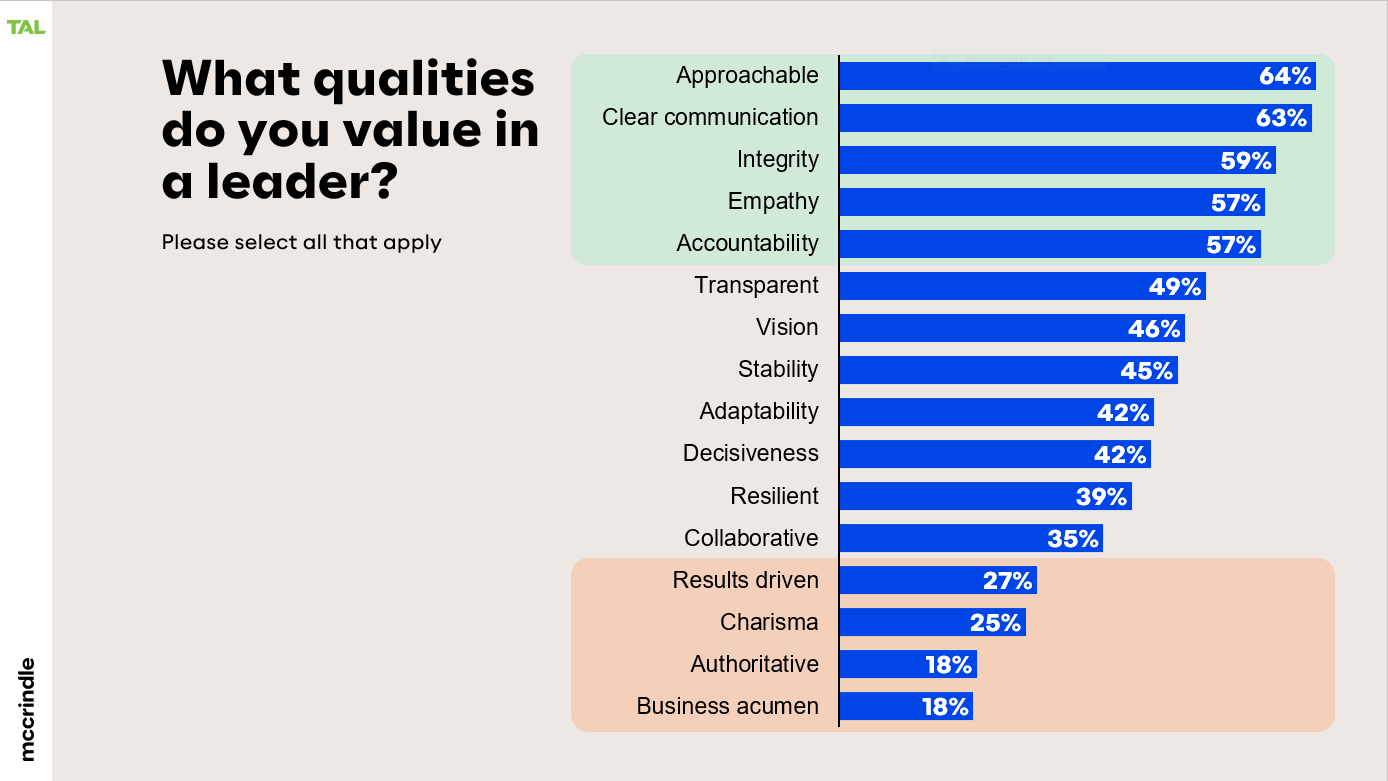
Research presented by McCrindle found local businesses rank among the most trusted organisations in the country, largely because customers feel a personal connection with the owner.
“That trust grows when we bring personality, authenticity and relationship, into what we do,” he said.
For financial advisers, he argued, that personal connection, combined with an understanding of demographic and generational tides, will be critical to remaining relevant in a rapidly changing Australia.
Click here to see our other Riskinfocus 26 reports.