



Australia’s adviser workforce needs rebuilding, and a major opportunity lies in boosting female representation, writes Nga Vu, a Senior Financial Adviser with Lautum Life…

Financial adviser numbers in Australia are in desperate need of revival, and one of the biggest opportunities to address this is already in front of us.
Women remain underrepresented in advice, particularly in risk, and our numbers have stalled. If we want to change that, we need to focus on two things: bringing more women into the profession, and building career pathways that support them to stay.
Women make up just 22% of financial advisers, according to Wealth Data analysis. When you narrow that to pure risk advisers – just 1.2% of the profession according to Adviser Ratings — the number of female specialists becomes smaller again. This is not just a diversity issue, it is a missed commercial opportunity.
The commercial argument for women in advice
Women control approximately 85% of household spending and around 41% are responsible for insurance decisions – yet the profession advising them still doesn’t reflect them. If we are serious about growing advice businesses and strengthening the profession, this is a gap we can’t afford to ignore. It is one of the most obvious growth opportunities.
At the same time, financial advice is often positioned as a numbers-driven profession. In reality, it is far more human than that. Advisers are there during the most vulnerable moments in a client’s life, and while technical knowledge is essential, it is not what clients remember. They remember how you communicated, how you supported them, and how you showed up when it mattered.
Empathy, trust, and communication aren’t secondary skills; they are fundamental to delivering good advice…
Empathy, trust, and communication aren’t secondary skills; they are fundamental to delivering good advice. They’re also the qualities that draw many women to the profession and help them succeed. We need to be clearer about the nature of the role and the value of these skills, particularly in risk advice where the human element is front and centre.
Where the gap begins: pregnancy and maternity leave
While I was often one of the only women in the room, I didn’t feel my experience differed from my male counterparts until I announced my first pregnancy. From that point, opportunities I was qualified for began to pass me by, based on assumptions about my availability rather than my capability. These decisions were not deliberate, but they reflected the unconscious biases that still exist within the profession.
The birth of a child is one of the most common career drop-off points, and advice is no exception. For some women, stepping away is a choice. For others, it is the result of a workplace that no longer fits. Returning to work often means navigating a new identity while trying to re-enter a role that was never designed to flex.
I was fortunate to have a supportive environment around me as I returned to work part-time. My daughter became a frequent visitor and was welcomed by colleagues who became like family. I was also the first person in my organisation to take maternity leave and return, which meant there was no blueprint to follow; we had to work it out as we went.
Through that process, I became aware that the conversations we were having and the adjustments we were making were not just about my situation; they were shaping what the pathway could look like for the next woman who followed. What felt like making it work became a conscious effort to build something more sustainable.
Financial advice as a purpose-driven profession
One of the reasons I was drawn to advice was its impact. Growing up in a migrant family, I saw how a lack of financial literacy affected everyday decisions and opportunities. Advice was never just about money; rather, it was about helping people navigate life with more confidence.
This is something our industry does not communicate enough. We focus heavily on technical capability and compliance, but not enough on the human side of the role. In risk advice especially, the work is deeply purpose-driven, and that is a powerful drawcard for women considering the profession.
If we want to bring more women into advice, we need to do a better job of explaining what the career involves – and why it matters.
What success looks like in practice
It’s time to rethink what success looks like in practice to attract and retain female advisers. Flexibility is central to this, but not in the way it is often framed.
Part-time roles too often become full-time roles in disguise. That model is not sustainable, and often leads to talented advisers burning out, or leaving before they do. The practices that are retaining women are doing something fundamentally different. They are designing roles with flexibility built in from the outset, allowing advisers to scale workload up or down at different life stages and supporting transitions such as returning from parental leave.
Smaller practices, whether independent or part of a broader network, are leading the way…
For some women, that flexibility is not found within existing structures; it is created by stepping outside them. Starting their own practice is becoming an attractive path, offering control over workload, clients, and how advice is delivered. Licensee models like Bombora are playing an important role by providing the infrastructure, compliance support, and professional community that allow advisers to build their own businesses without doing it alone. For women in particular, this creates a pathway that combines independence with support.
Smaller practices, whether independent or part of a broader network, are leading the way. They can adapt, provide support, and create environments where flexibility is embedded in how the business operates.
That is what real success looks like in advice – not just attracting women into the profession, but creating structures where they can build careers and businesses that last.
Where to from here
At an industry level, we need to make advice a visible and viable career path for women. That means clearer entry pathways, more accessible professional development, and greater visibility of female role models. It also means recognising the people already in the industry who may have chosen support roles, unaware that a career as a risk adviser is open to them.
We also need to address structural barriers, including the cost pressures that make it difficult for smaller practices to support part-time advisers and those completing their professional year. Without addressing these constraints, progress will remain limited.
Demand for advice, particularly risk advice, continues to grow, creating a significant opportunity for the profession and for the next generation of advisers.
The talent is already there. The opportunity is already there. Now we need to build the path — and make sure it’s one that women can stay on.
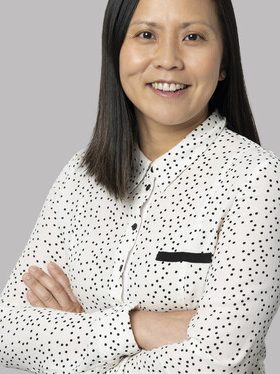
Nga Vu is a Senior Financial Adviser at Lautum Life within Bombora Advice, with over 20 years of experience in financial advice.
She has held a range of senior roles, including a long tenure as Partner and Risk Specialist at Kearney Group.
She transitioned to Lautum Life to pursue her passion for risk advice, reflecting her long-held belief that being an adviser is more than just a job.