





Our story on an Entireti panel discussion – where the latest crop of TPD products to counter affordability and sustainability pressures was outlined – also drew strong reader interest this week…
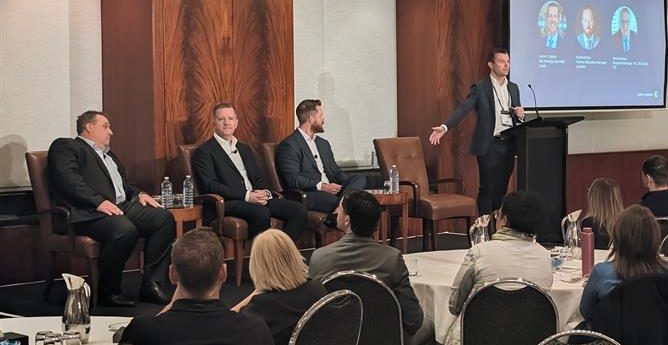
Three insurers participated in a panel discussion on sustainable TPD insurance at the recent Entireti Risk Summit Roadshow events, where they outlined the latest product option designs aimed at addressing affordability and sustainability pressures.

This session was very timely, given the fact that APRA and ASIC had recently hosted a life insurance CEO round table which discussed the growing sustainability pressures affecting the retail TPD product offer in Australia:
Acenda TPD Severity Option
Acenda’s Partner Education Manager, Marshall Ross, told advisers at the events that the industry had reached a point where traditional occupational TPD definitions no longer reflected modern claims experience or client affordability concerns.

He said the insurer’s new TPD Severity product option moved away from occupational definitions and instead assessed the severity of a claimant’s impairment using medical frameworks such as those used by clinicians.
See: ‘Mix ‘n’ Match’ TPD Option from Acenda
This offer uses whole person impairment (WPI) measures for physical conditions and the Psychiatric Impairment Rating Scale (PIRS) for mental health claims.
“It’s not tied to occupational duties,” said Ross. “It’s tied to the severity of the actual impairment the claimant would suffer.”
The severity option helps advisers target the higher costs of severe disability…
Under the policy, eligible claimants can access a lump sum payment if they meet either a 30% whole person impairment threshold or a level-three psychiatric impairment threshold.
Ross said the cover was designed to complement rather than replace traditional own occupation or any occupation TPD cover, allowing advisers more options to better manage premium sustainability.
“The severity option helps advisers target the higher costs of severe disability, such as treatment, equipment and home modifications, while keeping occupational TPD for core needs such as debt, helping to improve long-term affordability,” he said
He added the product was priced about 50% lower than traditional own occupation TPD and around 25% below any occupation pricing.
Zurich Continuous Care Option
Zurich Risk Strategy Specialist, Adam Crabbe, outlined the insurer’s Continuous Care TPD option, launched in October 2024, which shifts the focus away from permanent inability to work and towards ongoing needs.
See: Zurich Launches New TPD Option
Crabbe said Zurich’s analysis of claims data found around one in four TPD claimants required significant ongoing financial support for care, home modifications, and related expenses.
Zurich’s optional product offer assesses whether a claimant requires continuous care rather than relying on occupational incapacity definitions.
“It can be assessed agnostic of employment,” Crabbe said. “If something happens and they do need ongoing and continuous care, that’s where the product kicks in.”
He said cover was priced around 70% less than standalone ‘any occupation’ TPD and 90% lower than ‘own occupation’ cover.
Crabbe noted Zurich deliberately retained mental health eligibility within the product offer but attempted to introduce greater objectivity through use of the Psychiatric Impairment Rating Scale.
He also said existing Zurich and OneCare clients could transfer to Continuous Care without the requirement to be underwritten.
TAL TPD Support Option
TAL’s Regional Manager Vic/Tas/Qld, Daniel Barnes, detailed the insurer’s TPD Support Option, launched in December 2025. This option pays a traditional lump sum benefit for severe injuries and illnesses but changes how claims are assessed or paid where the recovery journey may be uncertain.
See: TAL Updates Flagship Product
Barnes told advisers that under TAL’s model, eligible claims relating to some mental ill health, fatigue and functional disorders are assessed using an any occupation like definition.
These eligible claimants are paid 20% of the sum insured at 12-month intervals provided they continue to meet eligibility criteria at each assessment.
…people engaged with the insurer and medical specialist have a greater chance of recovery…
He said the approach was designed to improve long-term sustainability while keeping claimants connected to medical treatment and recovery pathways.
“We know that people engaged with the insurer and medical specialists have a greater chance of recovery,” he said.

“And I think we’d all want our clients to recover and not have 35-year-olds with the stigma of being unable to work ever again.”
Barnes said TAL’s product delivered premium savings of around 20% for white-collar ‘own occupation clients’, with smaller savings for blue-collar occupations where claims were more heavily driven by physical injuries.
He also said TAL planned to offer its existing customers the ability to switch to the support option later this year without being underwritten.

Industry concern
Throughout the discussion, all three insurers argued that traditional TPD structures were becoming increasingly difficult to sustain due to rising claims costs, particularly around mental health and subjective disability assessments.
The expert panel also highlighted growing industry concern that some claimants assessed as permanently disabled under existing TPD definitions later returned to work, prompting calls for more objective and sustainable claim assessment frameworks.
This concern was also reflected at the APRA/ASIC CEO round table, at which participants discussed what a future fit-for-purpose protection product for permanent disability and mental health could look like, including products that better reflect recovery pathways, episodic capacity and evolving patterns of work.
See: TPD Sustainability Pressures Topic of Industry Debate
Riskinfo will report news of further TPD product initiatives as the manufacturers double down on their efforts to evolve life insurance products to better accommodate a modern day Australian workforce in a changing Australian society.