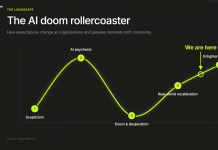

A consumer survey carried out by the FAAA for its Value of Advice report shows Baby Boomers are less open to AI advice, while Generations Z and Y are far more comfortable with it.
When given the choice between fully digital advice, human-led advice, or a hybrid advice model, most consumers said they prefer a traditional adviser relationship with limited use of digital tools.
The majority of respondents say the qualities they most value in (human) advisers include:
- Personal guidance (64%)
- Experience and judgment (63%)
- Emotional support and trust (59%)
Many also feel the same way about tailored risk assessment (34%) and motivation to follow through on financial plans (32%). These views are particularly strong among advised clients compared with the unadvised.
…very few Australians are interested in purely digital advice models…
While close to half of surveyed consumers are comfortable with AI for administrative tasks, one in five are not, and around a third remain unsure.
“It’s clear that very few Australians are interested in purely digital advice models and still require involvement of human advisers,” states the report.
The survey also reinforces that advised Australians are consistently better off than their unadvised peers, regardless of age or wealth.
Advice index
The FAAA’s Value of Advice Index measures the financial and non-financial benefits of advice and states that clients who work with an adviser enjoy:
- A higher quality of life
Click image to download the full Value of Advice report. - Stronger emotional wellbeing
- Greater sense of purpose
- Stronger social connections
- Better health
- Reduced financial stress
“They have greater financial confidence, financial satisfaction, and feel that financial advice has made them tangibly better off, with the value clearly outweighing the cost,” states the report.
The report’s authors also state that while the cost-of-living crisis and ongoing economic volatility continue to weigh on many households, the perceived value of advice has strengthened.
“The value of advice indicators observed last year have been sustained with a growing gap between the experience of the advised and unadvised,” states the report.
“In fact, the perceived value of financial advice has notably increased among clients – not just despite market uncertainty but because of it.”
However, barriers to working with a financial adviser remain the same, states the report, and include the perception that it’s too expensive, is only for rich people and others who feel their circumstances do not justify the need.
“This year, we have once again been able to systematically bust these myths.”