

New research from TAL has found super fund members who actively engage with their insurance cover are substantially more confident about their financial security than those who don’t and that almost a quarter of those in a default scheme don’t know they can adjust it.
Its study of 2,000 super fund members aged 25 to 64 reveals that the more informed and engaged a member is, the more financially confident they are.
Findings include that members who don’t know their insurance status are the least confident, at 18%. That rises to 52% among those with default cover, and to 77% among members who have proactively adjusted their cover to suit their needs.
When members understand their cover and how it works, it gives them real peace of mind…
The research also found awareness of cover levels played a significant role in confidence. Among members with default cover, 64% who knew the amount of insurance they held felt adequately protected, compared with 42% who did not know their level of cover.
TAL GM Group Partnerships, Dan Taylor said the findings showed the importance of helping members better understand their insurance.

“Our research shows that insurance isn’t only valuable for those who claim,” he said.
“When members understand their cover and how it works, it gives them real peace of mind – and super funds are well placed to help them get there.”
Taylor said more than eight in 10 members trusted their super fund to provide guidance on insurance and wanted to receive information on the topic regularly.
TAL also found member engagement prompted action, with 37% of respondents who recalled receiving insurance communications from their fund saying it motivated them to seek further information or review their cover.
The research identified younger Australians and women as key groups requiring greater engagement, and that 24% of those with default cover don’t know they can adjust it.
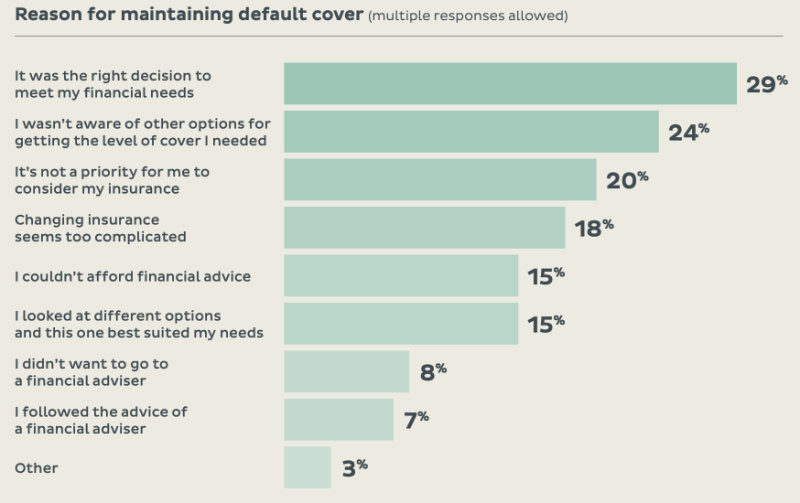
“Rather than making an informed choice, these members are defaulting to inaction – often driven by assumptions about cost and complexity that don’t match reality,” states the report.
Many members aged 25 to 34 were unaware whether they had default insurance through super, while women were less likely than men to know their insurance status or adjust their cover.
Taylor said traditional messaging that focused on dependants and mortgages may not resonate with younger consumers and suggested there was an opportunity to position insurance around “living benefits” including support during recovery from illness, injury, or mental ill-health.
Click here to download the full report.