



Australia faces a significant financial capability shortfall ahead of an estimated $5.4 trillion in intergenerational wealth transfers by 2050, according to new research from Deloitte Access Economics and Iress.

The report, The Big Lift, finds that 59% of Australians have low financial capability, with only 17% thought to be at an advanced level – raising concerns younger cohorts set to inherit substantial assets lack the skills to manage them effectively.
The research highlights a major strategic opportunity for financial advisers, superannuation funds and advice technology providers to play a central role in strengthening national financial literacy and resilience.
Deloitte’s modelling shows that nearly half of Australians (48%) find financial concepts too complex, leaving them vulnerable to poor decision-making and financial scams. The firm estimates that if every Australian reached an advanced level of capability, average household wealth would rise by $122,950, adding $1.2 trillion nationally.
Deloitte Access Economics partner John O’Mahony said the findings point to an urgent need for sector-wide intervention.
“Financial capability is critical for building wealth and supporting Australia’s economic prosperity, yet most Australians lack it,” O’Mahony said. “With rising living costs, sophisticated scams and trillions in assets changing hands, the need to act is urgent.”
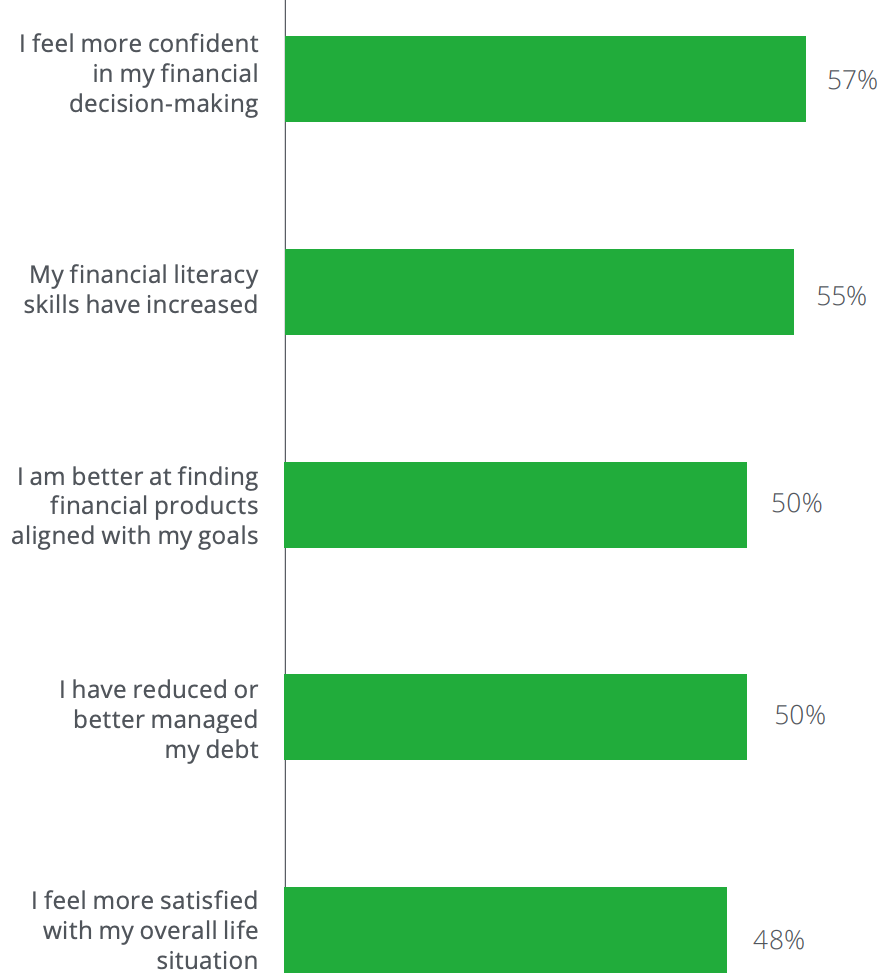
O’Mahony said 57% of Australians reported improved decision-making after receiving advice or financial education, underscoring the role of advisers and super funds in translating knowledge into confident action.
Advice industry growth
The report also reinforces earlier Deloitte–Iress research, Advice 2030, which identified a $2.1bn growth opportunity for advice firms through specialisation, technology-enabled scaling and alternative advice models.
Iress Wealth APAC’s CEO Kelli Willmer said the new findings show how the advice sector can simultaneously expand its commercial footprint and lift national financial capability.
“Technology and regulation have opened the door to rethink how advice is delivered and who can access it,” Willmer said.
“With 63% of Australians under 40 open to digital advice, hybrid models, AI and chat-based guidance can help scale advice efficiently.”
Willmer said Iress is exploring enhancements to its Xplan platform, including new digital tools and financial-health-check capabilities, to support advisers and super funds in offering scalable education, simplified products and coaching programs.
The report reveals that while financial capability has only varied slightly over time, financial literacy levels are in decline, down by 4.5% between 2016 and 2020. This, states the report, is equivalent to 3.6 million adult Australians having lower financial literacy.

Implications for advisers
Australians with high financial capability are:
- Twice as likely to seek professional advice
- Twice as likely to undertake retirement and estate planning
- More likely to salary-sacrifice (up 21 percentage points)
- More likely to check super balances (up 12 percentage points)
- Associated with five times greater net wealth by retirement compared with those who develop capability later in life.
The report argues that advisers and super funds should diversify their service models – offering guidance, education programs and digital advice – to meet evolving consumer expectations and address capability barriers at scale.
About the research
The Big Lift draws on economic modelling, a survey of 2,000 Australians and consultation with industry, non-profits and education stakeholders.
Deloitte and Iress say coordinated industry action could materially improve wellbeing, reduce financial stress and support long-term economic resilience.